What Details About My Rolex Will Change the Offer the Most?
When you’re thinking about selling or consigning your Rolex, understanding the factors that impact the offer you receive is crucial. With 12 years of experience navigating luxury resale and secondary-market dynamics, I’ve handled everything from singular watch sales to large collection liquidations. Whether you’re working with companies like Diamond Banc or RESIDENT™, knowing exactly what drives an offer up or down can save you from common pitfalls.
Watch collecting today is less about mere ownership and more akin to portfolio-style stewardship. Every Rolex you own has two important numbers behind it: its insurance appraisal and its live market value. These numbers rarely line up perfectly. In this detailed guide, we’ll unpack which details about your Rolex influence offer prices the most, why live secondary-market data beats sticker prices, and how to leverage comparable sales and demand signals to your advantage.

Insurance Appraisal vs Market Pricing: Why Your Offer May Surprise You
One of the most common misunderstandings I encounter involves the difference between a Rolex’s insurance appraisal and its market price. Many sellers confuse these numbers, often leading to frustrating valuations.
- Insurance appraisal: A replacement cost estimate, usually based on MSRP and intended to cover loss or theft.
- Market price: The actual amount buyers are willing to pay right now, influenced heavily by supply, demand, and condition.
For a brand like Rolex, especially on models that may no longer be in production or that have gained collector demand, the market price can diverge significantly from insurance values. This mismatch is why saying “just check MSRP” when pricing discontinued or rare Rolex models doesn’t cut it anymore. Instead, sellers should focus on what’s happening in the live secondary-market—not theoretical or list pricing.
Live Secondary-Market Data and Comparable Sales: Your Best Pricing Tools
Platforms used by resellers like Diamond Banc and RESIDENT™ rely heavily on continuous feeds of secondary-market data. This includes recent trade completions, auction results, and dealer sales to create a dynamic overview of what a particular Rolex reference is currently worth.
Here’s why these tools matter:
- They provide real-time pricing transparency, avoiding outdated sticker shock or overly optimistic offers.
- They help identify comparable sales—watches with similar references, condition levels, and completeness—giving sellers and buyers legitimate benchmarks.
- These data sets reveal important demand signals, showing when certain references or configurations are spiking in popularity and value.
Without this data, offers are often haphazard guesses, which benefit neither side. When you prepare to engage Diamond Banc or RESIDENT™, having your own grip on live market comps lets you negotiate with confidence.
What Makes A Comparable Sale Comparable?
Not all Rolex sales factor equally into valuation. A sales result of a mint-condition, full-set Daytona reference 116500LN isn’t a perfect comp for a 5-year-old sub with missing papers. That’s why the following criteria are essential:
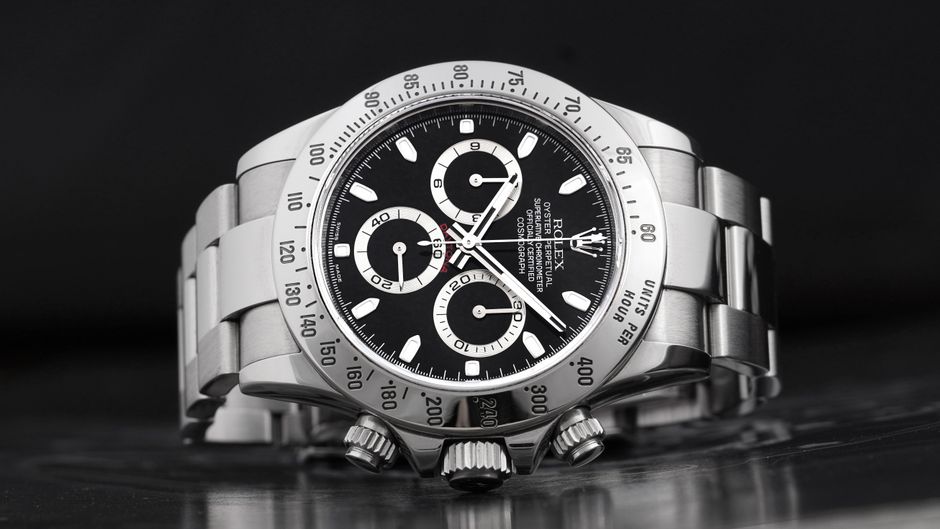
- Reference and model number (e.g., 116500LN, 126610LV)
- Condition level — including bezel and case wear, scratches, bracelet stretch, and service history
- Papers and box — the presence of original documentation and packaging
- Configuration details — dial variants, bezel colors, special editions
- Saturation effects — how many similar watches are actively listed or recently sold
Papers and Box: How Completeness Drives Offer Value
If you’re wondering what detail impacts your offer the most, the presence of your Rolex’s papers and box could be at the top of the list. While condition is crucial, authenticity and provenance verified by original documents multiply desirability and market confidence.
Why does this matter so much?
- Guarantees authenticity: Fewer buyer doubts mean more competitive bids.
- Increases collectability: Full sets often become heirloom pieces with added sentimental and monetary value.
- Improves resale speed: Dealers prefer full sets because they turn inventory faster.
Consider a Rolex Submariner reference 114060. A well-worn but full set watch can command a price closer to market highs than one missing its warranty card and box, even if it looks better cosmetically. Always ask yourself, “Is my watch full set or not?” before discussing price with any buyer.
Condition Level: The Fine Line Between Mint and Wear
Another primary determinant of your Rolex’s offer price is its condition level. Watch buyers and secondary-market managers don’t just eyeball scuffs—they grade condition systematically, assessing:
- Case wear: Dings, scratches, polishing history
- Crystal integrity: Chips, scratches, original vs replaced parts
- Bracelet stretch and clasp functionality
- Dial and hands condition: Patina is accepted and even valued on vintage, but damage and replacements hurt offers.
- Movement functionality and service history
Sellers sometimes underestimate how much even light polishing can affect value. Excessive polishing may soften the case angles, reducing collector appeal. Meanwhile, untouched original condition—despite some wear—may command premium pricing from purists.
Condition and Demand: How They Interact
Put simply: in a saturated market where a model is plentiful, condition differences affect offers more strongly. But for rare, high-demand references, such as a vintage Rolex Daytona Paul Newman or a limited-run GMT Master II, demand can sometimes overshadow minor imperfections.
Live market data and recent sales show this interplay clearly. RESIDENT™’s platforms, for example, illustrate how a subpar example of a highly sought-after reference may actually fetch more than a pristine one of a less popular watch. Hence, understanding your model’s reference demand is key.
Reference Demand and Saturation Effects on Value
Not all Rolex collectibles are created equal. Certain references exhibit intense demand, while others suffer from saturation and decreased interest. Understanding where your watch fits on this spectrum directly influences your offer.
Reference Demand Level Typical Market Trend Offer Impact Rolex Daytona 116500LN Very High Strong appreciation, limited availability Offers near or above MSRP, less condition-sensitive Rolex Submariner 114060 Moderate-High Stable value, steady market Offers depend heavily on condition and completeness Rolex Explorer II 16570 Moderate Steady market, some saturation Offers sensitive to condition and completeness Rolex Air-King 116900 Lower More available, less collector focus Offers lower and more condition-dependentNote: Market dynamics shift frequently. The key is to use live secondary-market tools to gauge current demand before agreeing to any offer.
How Saturation Influences Offers
When multiple watches of the same reference flood secondary channels—whether due to owner selling trends, dealer inventory, or new Rolex releases—buyers gain leverage. They can pick and choose condition, papers availability, and price.
Conversely, a pinched supply inflates prices and bids. Diamond Banc and RESIDENT™ both emphasize analyzing live listing volume alongside sale velocity to understand saturation and adjust offers accordingly.
Summary: What Details Will Change Your Rolex Offer the Most?
Based on my experience in luxury resale management, these are the details you want to nail down as you prepare to evaluate offers:
- Papers and box: Full set watches give you a substantial bid advantage.
- Condition level: Understand how wear, polishing, and service history affect your model’s desirability.
- Reference demand: Use live market data to see how sought-after your Rolex really is.
- Comparable sales: Look for recent sale prices of near-identical watches to set realistic expectations.
- Saturation effects: Consider how many similar watches are currently available and recently sold.
Ultimately, don’t settle for vague offers or advice that leans on MSRP or replacement appraisal alone. Tap into live secondary-market data and comparable sales — tools heavily used by dealers at Diamond Banc and RESIDENT™ — to get a true picture of what your Rolex is worth today.
Next Steps for Sellers
If you’re ready to sell, start by gathering all resident.com your documentation and assessing your watch’s condition honestly. Use reputable platforms to research comparable sales of your exact reference and configuration. When talking to buyers or consignment desks like Diamond Banc or RESIDENT™, always clarify whether your watch is full set and confirm the condition level transparently. This will empower you to secure an offer that reflects your watch’s actual value—not just insurance or MSRP figures.
Remember, watch collecting is stewardship, and selling is part of that process. Managing your Rolex as a portfolio asset, informed by live secondary-market signals, ensures you preserve and realize its value successfully.